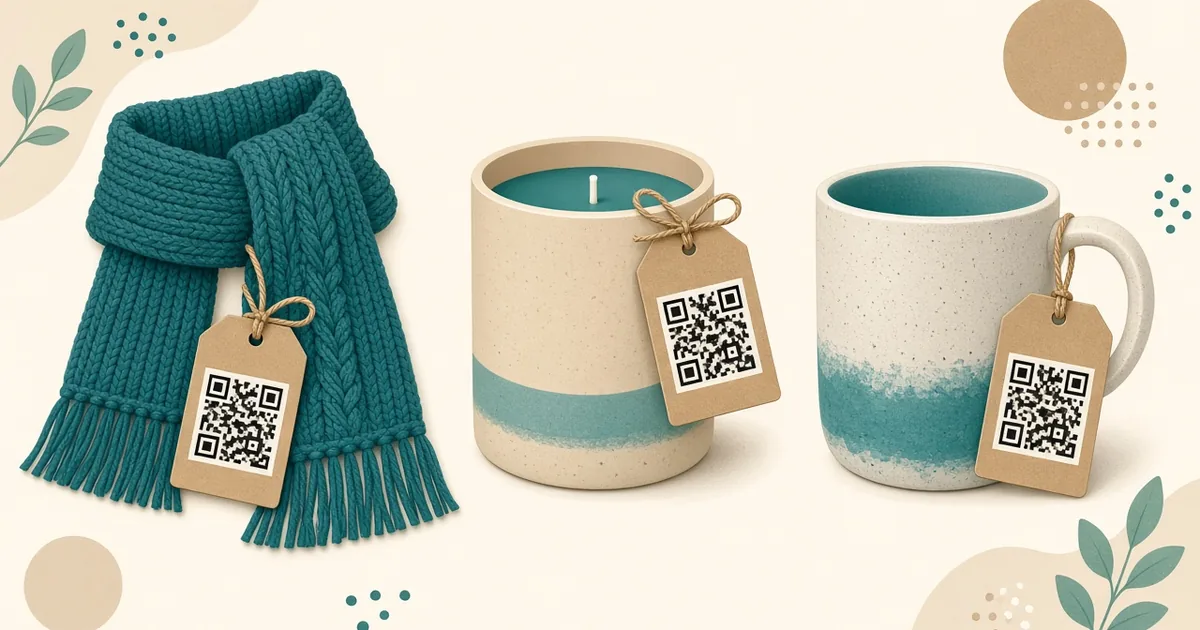
QR Code for Handmade Product Tags: Tell Your Story
Add QR codes to handmade product tags to share your maker story, care instructions, reviews and reorder links. Design ideas for crafters and small shops.
By James Dom · ·
Handmade products sell because of the story behind them: who made it, how, from what, and why. But a hang tag is tiny. You might fit your logo, a price and a "handmade with love" line. A QR code on the tag lets you share far more: a video of you making the piece, care instructions, the materials you use, a way to leave a review, and a link to buy again or follow your shop.
This guide is for makers who sell at markets, in shops, on consignment or online: jewelry, candles, soap, ceramics, knitwear, leather goods, art prints and more.
What your tag QR code can link to
Pick one main purpose for each product line:
- Your maker story. A short page or video about you and your process.
- Care instructions. How to wash, store or look after the product. A PDF QR code works well for printed care cards.
- Materials and sourcing. Where your wool, clay, wax or leather comes from.
- Your online shop. So customers can buy again or order a gift.
- Social media. An Instagram QR code or TikTok QR code to follow your new work.
- Reviews. A Google review QR code or your shop's review page.
- A making-of video. See our guide to video QR codes.
Many makers use a simple landing page with all of these, like a link in bio QR code, so one code on every tag covers everything.
Why it works for handmade products
- Builds trust. Customers see that a real person made the item.
- Justifies the price. Seeing the process explains why handmade costs more than mass-produced.
- Brings repeat customers. Buyers find you again when they want another.
- Reduces questions. Care instructions are always one scan away.
- Works at markets and in shops. Even when you're not there to talk to customers.
Step 1: Write your maker page
Keep it short and personal:
- A photo of you or your workspace (if you're comfortable)
- Two or three sentences about how you started
- How each piece is made
- Materials and care
- Links to your shop and social media
Write it in your own words. If you used AI to draft your product descriptions or about page, edit them so they sound like you. Our sister site's guide to humanizing marketing copy can help you make it sound natural and personal.
Step 2: Create the QR code
Paste your link into the generator. Use a dynamic QR code so you can change your shop link or add seasonal collections without reprinting tags. You can also track QR code scans to see how many customers scan after buying.
Step 3: Design the tag
Handmade tags should look handmade too, but the code has to scan:
- Size: at least 2 cm wide on small tags.
- Contrast: dark code on a light background. Kraft paper works if the code is printed in black.
- Color: you can match your brand color, as long as it's dark enough. See change QR code color safely.
- Logo: add a small logo in the center with a QR code with logo.
- Frame: add a short label like "Meet the maker" or "Care tips" using QR code frames.
Tag wording ideas
- "Scan to see how this was made"
- "Meet the maker"
- "Care instructions inside"
- "Loved it? Scan to leave a review"
- "Scan to shop the collection"
Where to put the code
- Hang tags on clothing, bags and accessories
- Stickers on candle jars, soap wrappers and boxes
- Care cards tucked into packaging
- Thank-you cards for online orders. See our QR code parcel inserts guide.
- Market stall signs, so passersby can follow you
- Gift wrap, with a code to a personal message or video
Printing tips
- Print a test sheet and scan every code before cutting tags.
- Use a printer with good resolution. Blurry codes fail.
- Avoid textured or glossy papers that blur or reflect light.
- If you hand-stamp or emboss, make sure the code itself is printed sharply.
Our QR code size for printing guide has more detail.
Ideas by product type
Jewelry: Care tips (avoid water, store separately), metal and stone information, ring sizing guide.
Candles: Burn instructions, wax and scent details, safety notes.
Soap and skincare: Full ingredient list, allergy notes and usage tips.
Knitwear and textiles: Washing instructions and the story of the yarn.
Ceramics: Dishwasher and microwave safety, how the glaze was made.
Art prints: The story behind the piece and a link to original works.
Selling in shops and on consignment
When your work is in someone else's shop, you can't talk to customers. The QR code does it for you. It also helps customers find your online shop if they want more, which shop owners usually accept as long as you don't undercut their price.
Common mistakes
- Codes too small or printed on textured paper.
- Linking to a generic homepage instead of the right product line.
- No call to action on the tag.
- Pages that are slow or not mobile friendly.
- Forgetting to update the link when you move platforms.
Measure what works
After a few markets or months of sales, look at your scan data. Which product lines get the most scans? Do scans turn into followers or repeat orders? Use that to decide which tags deserve a video, and which just need care instructions.
Use the code to collect customer photos
One lovely use for a tag code is inviting customers to share how they use your work. A page that says "Show us your mug in its new home" with a simple upload form or your social media hashtag can bring in real customer photos. With permission, you can share them on your shop page and social media. Customer photos are some of the most convincing marketing a small maker can have, because they show the product in everyday life rather than in a styled studio shot.
Seasonal and gift tags
Around holidays, many makers switch to gift tags. A dynamic code lets the same printed tag point to a gift guide in December and a summer collection in June. You can also add a gift message option: the buyer records a short video or writes a note, and the recipient scans the tag to see it. It turns a simple product into a more personal present.
Keep it personal
The best handmade tags feel like a note from the maker. Even with a QR code, keep a handwritten touch where you can: a signature, a product name or a short thank-you. The code adds depth; your personal touch makes people want to scan.
FAQ
Should I put a QR code on my handmade product tags?
Yes, if you want to share your story, care instructions or a way to buy again. Keep it small and clearly labeled.
What should a handmade tag QR code link to?
Your maker story, care instructions, online shop, social media or review page.
How small can the QR code be on a tag?
About 2 cm wide is a good minimum. Test before printing.
Can I print QR codes on kraft paper tags?
Yes, if the code is printed in a dark color with good contrast.
Can I change the link after printing tags?
Yes, if you use a dynamic QR code.
Ready to create your own QR code?
Try qrfyy free